When Listening Changes Behavior: A Trauma-Informed Animal Communication Story
One of the most practical benefits of animal communication is the deeper understanding it can bring to behavior — especially with animals who come from traumatic or unfamiliar backgrounds.
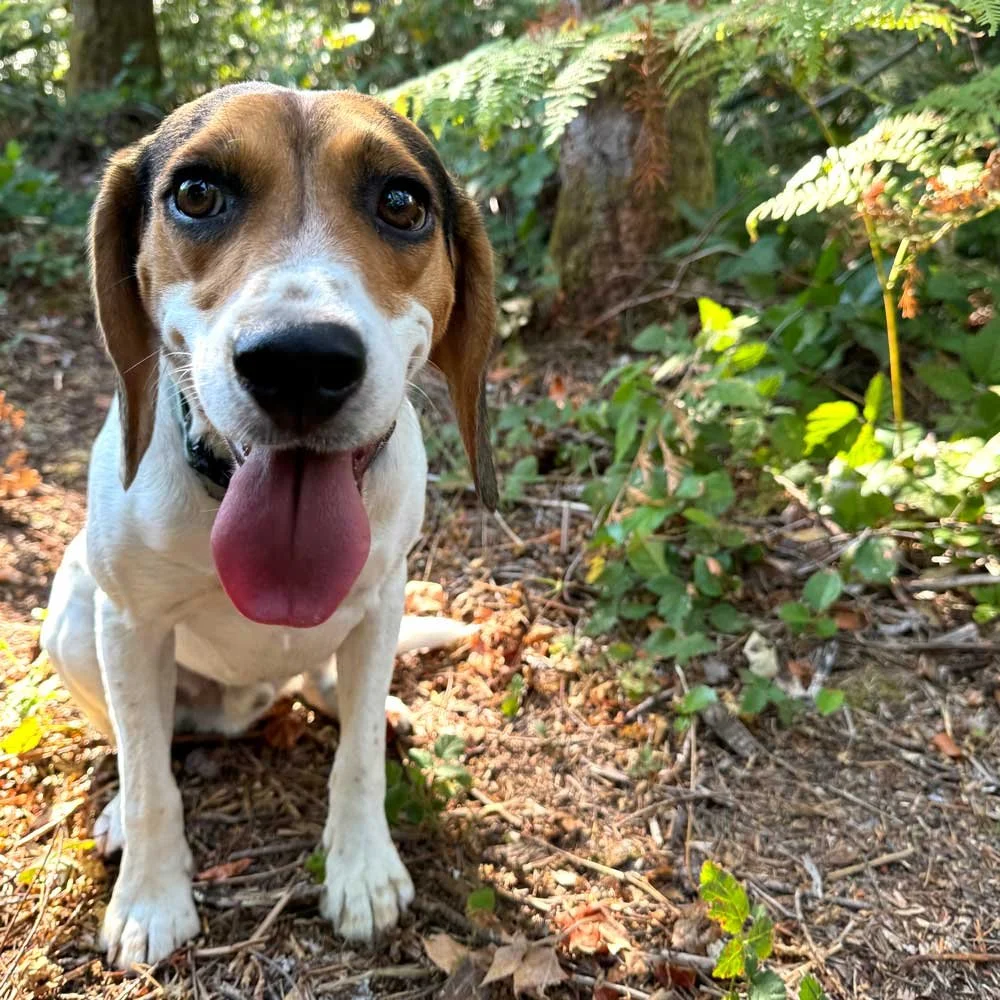
Not long ago, we welcomed Finn into our family after he was liberated from a research facility by Beagle Freedom Project. Like many animals coming from laboratory environments, he was still learning how to simply be a dog: exploring freely, making choices, and navigating a world that suddenly felt much bigger than anything he had known before.
As he grew more confident, that curiosity began showing up as escape behavior. Finn started digging under our fence and venturing into neighboring property and the surrounding forest. Because he wears a GPS collar, we were always able to locate him, but the environment around our home includes coyotes, bobcats, bears, and even cougars. The situation had real safety implications.
Traditional management strategies are important — secure fencing, supervision, training — but I also wanted to understand what was driving his behavior emotionally.
When I communicated with Finn, what came through first wasn’t defiance. It was excitement, curiosity, and a strong instinctual drive as a scent hound. He wasn’t trying to escape home; he was following a world that suddenly felt open to him.
At the same time, his past meant he didn’t always have a realistic understanding of danger. Animals who grow up in controlled environments sometimes lack exposure to natural risks, much like sheltered humans learning independence for the first time.
So our conversation focused on safety rather than restriction. I shared images and impressions of the predators in our area, how they move, how they hunt, and the genuine risk they posed. Importantly, I reassured him that the goal wasn’t limiting his freedom but protecting the life we’re building together.
His initial response was confident — even a bit cocky. He felt fast, capable, and strong. And honestly, that confidence matched his personality. He’s athletic, determined, and resilient.
But when the conversation shifted toward the impact his absence would have on the family — including me — something softened. The focus moved from adventure to relationship.
Since that conversation, his recall has noticeably improved, and the urge to wander has decreased significantly. No single conversation is a magic fix, and practical safety measures remain essential, but understanding his perspective helped shift both his behavior and my response to it.
This is one of the core values of trauma-informed animal communication: it isn’t about control or correction. It’s about listening beneath behavior to understand emotional needs, instincts, and past experiences.
Often, what looks like stubbornness, defiance, or misbehavior is simply an animal doing the best they can with the information and experiences they have.
And when we meet them there — with clarity, respect, and compassion — meaningful change can happen.