Supporting Animals Who’ve Known Trauma: Listening Beyond the Surface
Many of the animals I work with come from difficult beginnings — rescue situations, neglect, laboratory environments, or other experiences that leave emotional imprints long after physical safety has been restored.
Animal communication can be especially meaningful in these cases. It allows space for animals to express what they’ve experienced, how they’re feeling now, and what helps them feel safer moving forward.
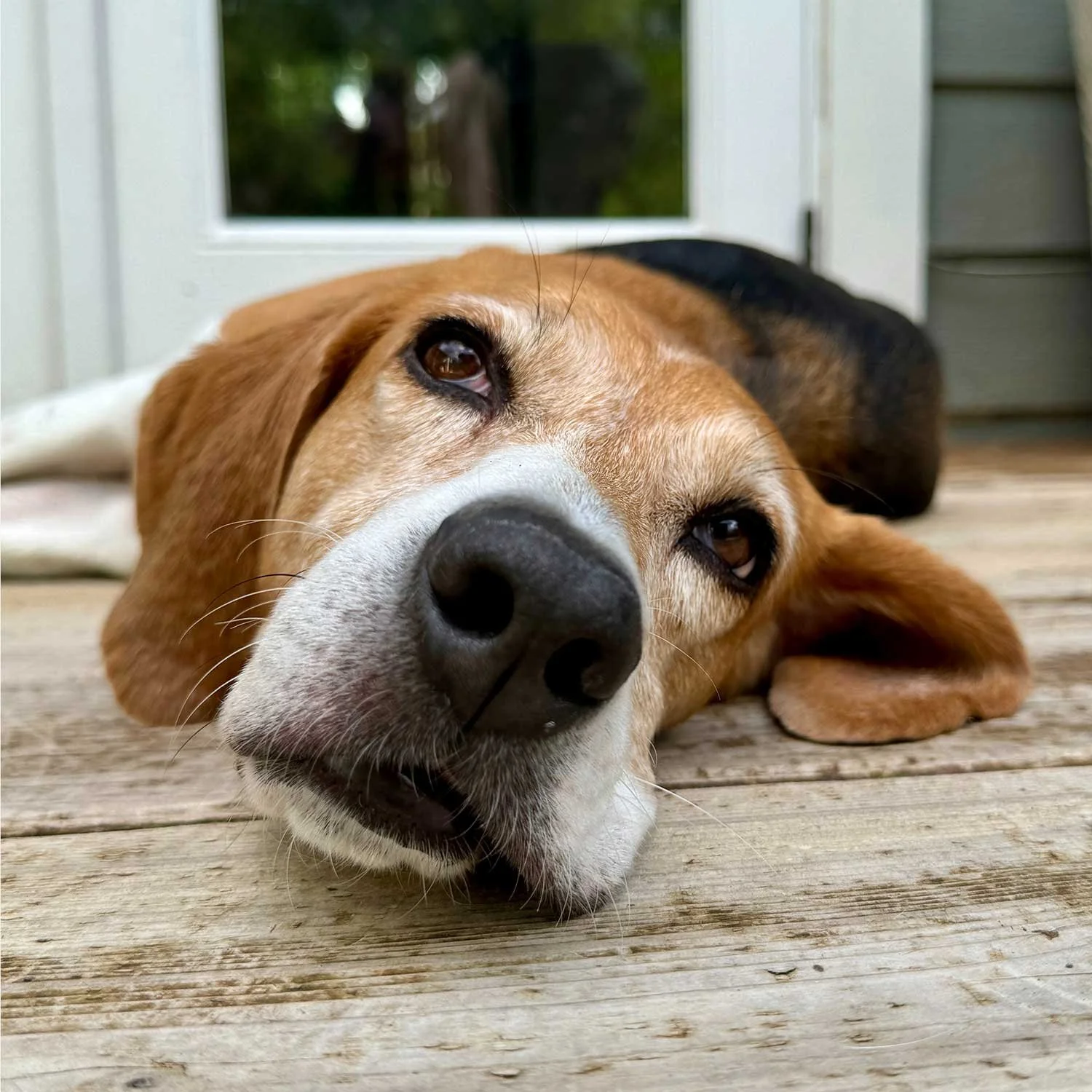
Gibbs is one of those animals.
He spent the first five years of his life as a test subject in a laboratory environment alongside hundreds of other dogs and cats. His early world was defined by confinement, unpredictability, and very little opportunity for normal social or environmental experiences.
When I first communicated with him, what struck me most wasn’t fear — though that was certainly present — but wisdom. He carried himself like an old soul: observant, thoughtful, cautious about trust but open when approached gently.
During our communication, he shared impressions of the lab environment — the sounds, the smells, the sense of anticipation when humans approached enclosures. There was noticeable anxiety around those memories, which is not uncommon for animals who’ve lived in highly controlled or stressful environments.
At the time, Gibbs had already been liberated along with the other animals and was adjusting to foster life. When I shared with him that he was safe and no longer in that environment, the emotional shift was immediate. Relief, curiosity, and tentative hope came through strongly.
From there, our conversation naturally moved toward his present life — walks, new surroundings, and his growing connection with his foster guardian. It was clear he was beginning to experience stability in ways he hadn’t before.
Eventually, Gibbs joined our family permanently. I stayed connected with him throughout his transport journey to Seattle, helping him navigate what was another major transition after years of uncertainty.
Today he’s settled beautifully into life here. He’s affectionate, engaged, and increasingly confident — still sensitive in some ways, which is completely understandable, but very much embracing the safety and love around him.
Stories like Gibbs’s are why trauma-informed animal communication matters so much to me. When animals have experienced profound stress, understanding their emotional world helps us respond with more compassion, patience, and realism about their healing process.
Communication doesn’t erase trauma. But it can:
Provide reassurance
Clarify emotional needs
Support trust-building
Help guardians respond more effectively
And most importantly, help animals feel heard
And for many animals who’ve lived the unimaginable, simply being heard is a powerful step toward healing.